Material Innovation and Technological Upgrading of Automotive Pipes: A Key Support for the Development of New Energy Vehicles
Publish:2025-08-05 Click:9

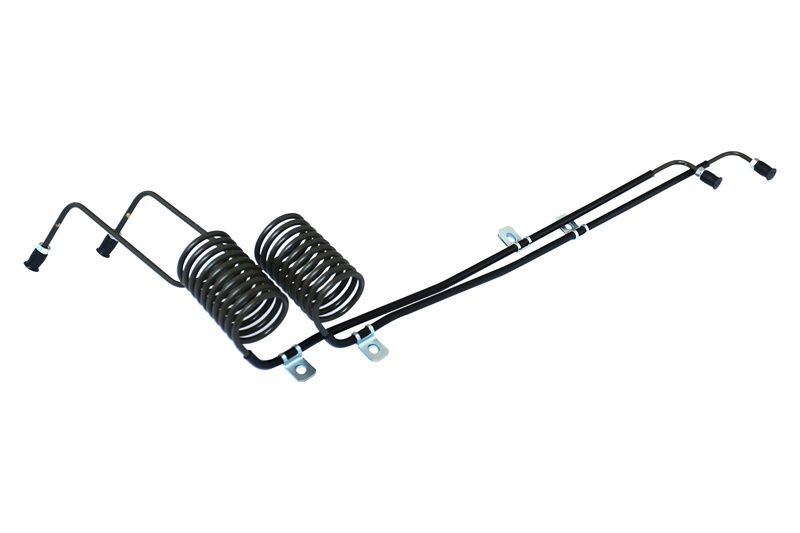
In the continuous iteration of new energy vehicle technology, the role of automotive pipes has long transcended that of a simple "conveyance channel". Innovations in their material selection and manufacturing processes are becoming a vital force driving improvements in overall vehicle performance. The upgrading path of pipeline systems, from traditional fuel vehicles to new energy vehicles, reflects the automotive industry’s unremitting pursuit of safety and lightweight design.

Material Selection: From Metal Dominance to Multi-Material Integration

Early automotive pipes were mostly made of metal materials such as steel and copper, which dominated the fuel vehicle era due to their high strength and corrosion resistance. However, in the field of new energy vehicles, the limitations of metal pipes have gradually emerged—their heavy weight and insufficient assembly flexibility make them unable to meet the demands for vehicle lightweighting and complex layout.


Today, automotive pipe materials are developing in a diversified direction. High-pressure hydrogen pipes adopt high-pressure-resistant carbon fiber composites, which are made by combining carbon fiber with a resin matrix. Their strength is comparable to that of metal, but their weight is only 1/4 of that of steel of the same volume, with extremely low hydrogen permeability. This makes them suitable for hydrogen fuel cell vehicles’ requirements for high pressure, light weight, and leak prevention. Data from a hydrogen energy vehicle manufacturer shows that after adopting carbon fiber composite pipes, the overall weight of the hydrogen storage system was reduced by 30%, and the cruising range was increased by approximately 15%.


In coolant pipes and refrigerant pipes, high-performance engineering plastics have become the preferred choice. For example, PA66 (polyamide 66) added with glass fiber can withstand temperatures above 150°C, has excellent impact resistance, and good flexibility. It can be flexibly bent according to the vehicle layout, reducing the number of joints and lowering the risk of leakage. In the battery cooling circuits of pure electric vehicles, the application rate of such plastic pipes has exceeded 80%, which not only reduces the vehicle weight but also lowers manufacturing costs.

Manufacturing Processes: Precision in Parallel

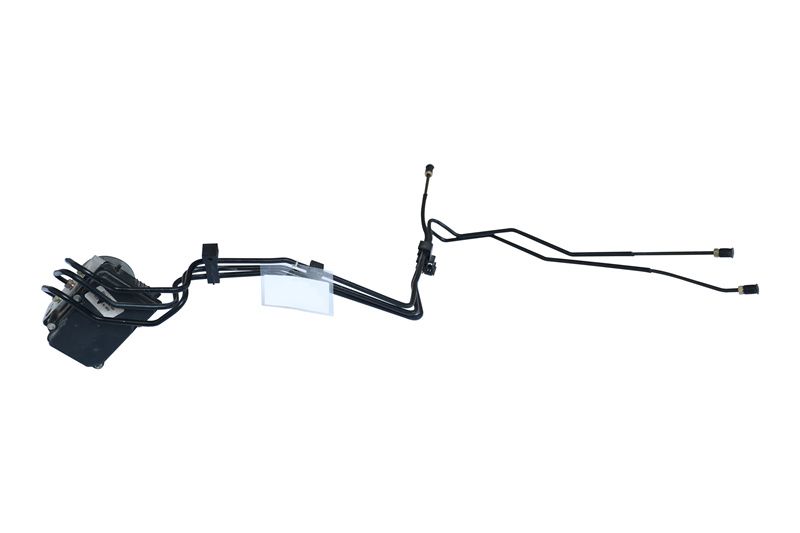
Traditional pipe manufacturing processes such as welding and bending are gradually being replaced by more advanced technologies to meet the high-precision requirements of new energy vehicle pipes. The application of laser welding technology has elevated the sealing performance of pipe joints to a new level. Weld strength is 20% higher than that of traditional arc welding, and the heat-affected zone is small, avoiding performance degradation caused by high-temperature deformation of pipes. This is particularly suitable for connecting high-pressure brake pipes and hydrogen pipes.


3D printing technology has opened up new possibilities for manufacturing complex pipes. For electronic control system cooling pipes with special shapes and complex internal flow channels, 3D printing enables integrated molding, eliminating multiple splicing steps and reducing fluid resistance. A new energy vehicle manufacturer used 3D printing to produce motor cooling pipes, which improved the smoothness of internal flow channels by 40% and heat dissipation efficiency by 12%, effectively solving the overheating problem of motors during high-speed operation.


In addition, pipe surface treatment processes are constantly upgrading. For battery coolant pipes, inner wall smoothing technology is adopted to reduce frictional resistance during liquid flow and improve heat dissipation efficiency. Pipes exposed under the vehicle are coated with corrosion-resistant layers to resist erosion from rain, snow, and salt, extending their service life to more than 1.5 times that of traditional pipes.

Technological Trends: Intelligence and Integration as the Direction

As new energy vehicles become more intelligent, automotive pipes are moving toward "functional integration". The pipe systems of some high-end models have integrated sensors that real-time monitor parameters such as pressure, temperature, and flow inside the pipes, and transmit data to the vehicle control system. When abnormal pipe pressure is detected, the system can issue warnings in a timely manner or even automatically cut off relevant circuits to avoid safety accidents. In hydrogen fuel cell vehicles, the response time of pressure sensors in hydrogen pipes has been shortened to 0.1 seconds, enabling rapid detection of tiny leaks and triggering protection mechanisms.


The integrated design of pipes also plays a role in reducing vehicle space occupation. By rationally arranging battery cooling pipes, motor cooling pipes, and air-conditioning refrigerant pipes—through shared brackets and optimized routing—the space occupied by the pipe system in the vehicle can be reduced by 15%, freeing up more space for the arrangement of battery packs and motors. An integrated pipe solution from a vehicle manufacturer reduced the number of underbody pipes by 25% and shortened assembly time by nearly 1/3, significantly improving production efficiency.


From materials to processes, from single functions to intelligent integration, every upgrade of automotive pipes is closely linked to the development needs of new energy vehicles. They are not only the "connectors" of various vehicle systems but also the "carriers" of technological innovation. In improving vehicle safety, economy, and cruising capability, they continue to contribute irreplaceable strength, serving as a solid foundation for the high-quality development of the new energy vehicle industry.


Related
Automotive Pipes: The
Automotive Pipes: The "Vascular System" of New Energy Vehicle Manufacturing
In the field of new energy vehicle manufacturing, although automotive pipes may seem like a "supporting role" among numerous components, they play a crucial role. Just like the blood vessels of the human body, they are key components ensuring the normal operation of all vehicle systems.Power Transmission and ControlThe core of power in new energy vehicles lies in the battery and motor systems, where automotive pipes are responsible for transporting power transmission media. Take hydrogen fuel cell vehicles as an example: hydrogen needs to be safely delivered from the hydrogen storage tank to the fuel cell stack through specially designed high-pressure pipes, where it is converted into electrical energy via electrochemical reactions to power the vehicle. These pipes must not only have excellent pressure resistance to withstand 70MPa or even higher pressures but also feature low hydrogen permeability to prevent hydrogen leakage, ensuring the stability and safety of power transmission.In the charging process of pure electric vehicles, coolant pipes are responsible for dissipating heat from the charging module. During fast charging, the charging module generates a large amount of heat; if not dissipated in time, it will affect charging efficiency and even damage the equipment. Coolant circulates in the pipes, carrying away heat from the charging module to keep it operating at an appropriate temperature, allowing the vehicle to replenish energy quickly and stably, thus enhancing the user’s charging experience.A Key Link in Thermal Management SystemsThe thermal management system of new energy vehicles is relatively complex, as it is related to battery life, motor performance, and ride comfort. Automotive pipes serve as the link connecting various heat exchange components. In terms of battery thermal management, coolant pipes are laid around battery modules. Batteries generate heat during charging and discharging; excessively high or low temperatures will affect their performance and lifespan. Coolant circulates through the pipes to carry away excess heat generated by the battery. When the battery temperature is low, the coolant can also be heated to warm the battery, maintaining it within the optimal operating temperature range of 25°C-40°C. This extends battery life and increases cruising range. Studies have shown that reasonable battery thermal management can extend battery life by 20%-30%.The motor and electronic control system also rely on automotive pipes. Motors generate a lot of heat during high-speed operation, which needs to be dissipated by coolant in the cooling pipes to ensure stable output power. For electronic control systems such as inverters and on-board chargers, coolant pipes can effectively carry away heat generated during operation, ensuring the normal operation of electronic components, avoiding faults caused by overheating, and improving the reliability of the entire vehicle.Ensuring Stable System OperationAutomotive pipes also play an important role in ensuring the stable operation of various systems in new energy vehicles. In the braking system, brake fluid pipes are responsible for transmitting braking pressure. When the driver steps on the brake pedal, brake fluid is pressurized in the pipes and precisely transmits the pressure to the brake calipers of the wheels, enabling the vehicle to brake. The sealing and pressure resistance of the pipes directly affect braking performance; if the pipes leak or lack sufficient pressure resistance, it may lead to brake failure, seriously endangering driving safety.In the air conditioning system, refrigerant pipes connect components such as the compressor, condenser, and evaporator. Refrigerant circulates in the pipes, transferring heat through phase changes to create a comfortable temperature environment inside the vehicle. Especially in new energy vehicles, since there is no waste heat from the engine to utilize, the heating function of the air conditioning system mostly relies on PTC heaters or heat pump technology. This places higher requirements on the thermal insulation and temperature resistance of refrigerant pipes to ensure that the interior can warm up quickly in cold weather, enhancing ride comfort.In new energy vehicle manufacturing, although automotive pipes are small, they assume key responsibilities such as power transmission, thermal management, and ensuring system stability, serving as an important guarantee for vehicle performance and safety. With the continuous development of new energy vehicle technology, performance requirements for automotive pipes in terms of lightweighting, high temperature resistance, high pressure resistance, and high sealing are increasingly stringent, driving continuous innovation in automotive pipe materials and manufacturing processes.
Material Innovation and Technological Upgrading of Automotive Pipes: A Key Support for the Development of New Energy Vehicles
In the continuous iteration of new energy vehicle technology, the role of automotive pipes has long transcended that of a simple "conveyance channel". Innovations in their material selection and manufacturing processes are becoming a vital force driving improvements in overall vehicle performance. The upgrading path of pipeline systems, from traditional fuel vehicles to new energy vehicles, reflects the automotive industry’s unremitting pursuit of safety and lightweight design.Material Selection: From Metal Dominance to Multi-Material IntegrationEarly automotive pipes were mostly made of metal materials such as steel and copper, which dominated the fuel vehicle era due to their high strength and corrosion resistance. However, in the field of new energy vehicles, the limitations of metal pipes have gradually emerged—their heavy weight and insufficient assembly flexibility make them unable to meet the demands for vehicle lightweighting and complex layout.Today, automotive pipe materials are developing in a diversified direction. High-pressure hydrogen pipes adopt high-pressure-resistant carbon fiber composites, which are made by combining carbon fiber with a resin matrix. Their strength is comparable to that of metal, but their weight is only 1/4 of that of steel of the same volume, with extremely low hydrogen permeability. This makes them suitable for hydrogen fuel cell vehicles’ requirements for high pressure, light weight, and leak prevention. Data from a hydrogen energy vehicle manufacturer shows that after adopting carbon fiber composite pipes, the overall weight of the hydrogen storage system was reduced by 30%, and the cruising range was increased by approximately 15%.In coolant pipes and refrigerant pipes, high-performance engineering plastics have become the preferred choice. For example, PA66 (polyamide 66) added with glass fiber can withstand temperatures above 150°C, has excellent impact resistance, and good flexibility. It can be flexibly bent according to the vehicle layout, reducing the number of joints and lowering the risk of leakage. In the battery cooling circuits of pure electric vehicles, the application rate of such plastic pipes has exceeded 80%, which not only reduces the vehicle weight but also lowers manufacturing costs.Manufacturing Processes: Precision in ParallelTraditional pipe manufacturing processes such as welding and bending are gradually being replaced by more advanced technologies to meet the high-precision requirements of new energy vehicle pipes. The application of laser welding technology has elevated the sealing performance of pipe joints to a new level. Weld strength is 20% higher than that of traditional arc welding, and the heat-affected zone is small, avoiding performance degradation caused by high-temperature deformation of pipes. This is particularly suitable for connecting high-pressure brake pipes and hydrogen pipes.3D printing technology has opened up new possibilities for manufacturing complex pipes. For electronic control system cooling pipes with special shapes and complex internal flow channels, 3D printing enables integrated molding, eliminating multiple splicing steps and reducing fluid resistance. A new energy vehicle manufacturer used 3D printing to produce motor cooling pipes, which improved the smoothness of internal flow channels by 40% and heat dissipation efficiency by 12%, effectively solving the overheating problem of motors during high-speed operation.In addition, pipe surface treatment processes are constantly upgrading. For battery coolant pipes, inner wall smoothing technology is adopted to reduce frictional resistance during liquid flow and improve heat dissipation efficiency. Pipes exposed under the vehicle are coated with corrosion-resistant layers to resist erosion from rain, snow, and salt, extending their service life to more than 1.5 times that of traditional pipes.Technological Trends: Intelligence and Integration as the DirectionAs new energy vehicles become more intelligent, automotive pipes are moving toward "functional integration". The pipe systems of some high-end models have integrated sensors that real-time monitor parameters such as pressure, temperature, and flow inside the pipes, and transmit data to the vehicle control system. When abnormal pipe pressure is detected, the system can issue warnings in a timely manner or even automatically cut off relevant circuits to avoid safety accidents. In hydrogen fuel cell vehicles, the response time of pressure sensors in hydrogen pipes has been shortened to 0.1 seconds, enabling rapid detection of tiny leaks and triggering protection mechanisms.The integrated design of pipes also plays a role in reducing vehicle space occupation. By rationally arranging battery cooling pipes, motor cooling pipes, and air-conditioning refrigerant pipes—through shared brackets and optimized routing—the space occupied by the pipe system in the vehicle can be reduced by 15%, freeing up more space for the arrangement of battery packs and motors. An integrated pipe solution from a vehicle manufacturer reduced the number of underbody pipes by 25% and shortened assembly time by nearly 1/3, significantly improving production efficiency.From materials to processes, from single functions to intelligent integration, every upgrade of automotive pipes is closely linked to the development needs of new energy vehicles. They are not only the "connectors" of various vehicle systems but also the "carriers" of technological innovation. In improving vehicle safety, economy, and cruising capability, they continue to contribute irreplaceable strength, serving as a solid foundation for the high-quality development of the new energy vehicle industry.
返回顶部